
Home/Services/Software
Software

Software from LCA and EPD practice.

For many years we have been preparing life cycle assessments and EPDs for manufacturers. For larger or dynamic product portfolios, we complement this expert work with our own software solutions that structure and scale recurring data, calculation and EPD processes.

15+ years of experience·2,000+ life cycle assessments·300+ EPDs prepared
Starting point

Why software at all?

Individual LCA and EPD projects can be handled on a project basis – and of course we work software-supported there too. As the number of products and updates grows, so does the benefit of reusable models and digital support.

Many productsPortfolios with dozens or hundreds of articles.
VariantsProducts differ in only a few parameters.
UpdatesEPDs expire, background data change.
Structured data processesThe same data are needed again regularly.

For individual or rarely updated declarations, project-based processing is often the right route. For larger portfolios, many variants or regular update requirements, the EPD Suite can structure recurring data and calculation processes and make them more efficient.

How we structure portfolios on expert grounds before software comes into play:Product data & portfolios →
TodayIn use

EPD Suite

Our client-specifically configured software solution for recurring EPD and LCA processes in product portfolios.

It is used where product portfolio, variant diversity or regular update requirements make a software-supported implementation economically sensible.
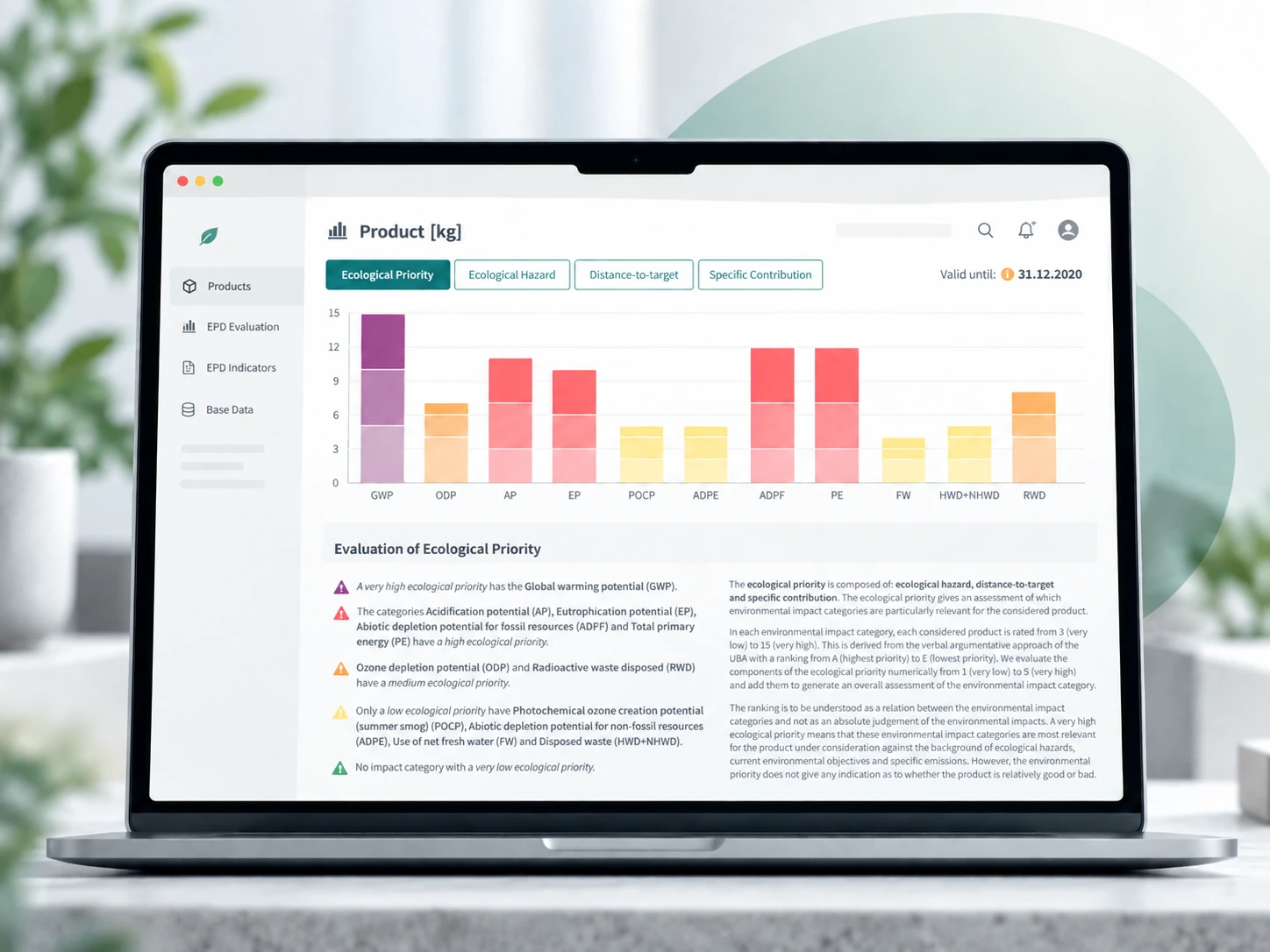
EPD Suite · example user interface
View of the EPD Suite by brands & values
Basic logic · what the EPD Suite covers
Product dataCapture product and variant data in a structured way.
CalculationBased on expertly built LCA models.
EPD preparationPrepare results and documentation for recurring EPD processes.
Modules of the EPD Suite
EPD BuilderPrepare and update EPDs for products and variants.
EPD AnalyzerVisualise, compare and analyse EPD and LCA data.
ResearchR&D project

KEDRA

In the KEDRA research project, we develop methods to capture and structure product and environmental data in a more automated way and to make them usable for further processes via interfaces. KEDRA is an ongoing R&D project, not a finished product. What proves robust in research is gradually transferred into our software and project work.

KEDRA · R&D project · target pictureFind & structure data
Data sources on the outside, the structured matrix emerges in the centre. Finding, harmonising and assigning are named one after the other.
Data types remain distinguishablePrimary data, imputed values, reference values and expert-reviewed values are flagged differently – imputed values never appear like measured values.
Humans in the processQueries about possible process steps and conspicuous values go to experts. Automation supports the review, it does not replace it.
Structured handoverKEDRA delivers a structured, traceable data basis to LCA/EPD systems. Calculation and declaration continue to follow their own rules.

KEDRA is an ongoing R&D project; the illustration shows a target picture, not a product function available today. All values are schematic.

Our stance

Not automating as much as possible. But the right things.

Our software and methods form a proven basis and are aligned with the company’s portfolio, data structure and requirements. What matters is not automating as much as possible, but mapping with software precisely those steps where it is technically robust and economically sensible.

01UnderstandClarify data, product logic and requirements first.
02ModelBuild a technically robust LCA model.
03ReuseMake models and data usable for variants and updates.
04AutomateMap and automate suitable process steps with software support.
Determine the right EPD route →
Expertise + software

We do not develop software detached from the technical process.

The requirements for our software arise from our own project work with manufacturers. This experience shapes our software development. You therefore receive not only practice-oriented software but also the expert support of our team.

LCA and EPD methodologyModelling according to standard, PCR and programme requirements as the basis of every calculation.
Real product portfoliosExperience from working with manufacturers, their product families and ranges.
Variant logicWhich parameters actually influence the environmental impact.
Data requirementsWhich data must be collected, checked and maintained, and how.
Verification practiceWhat independent verifiers and programme operators expect in terms of documentation.
Contact

Where does software pay off in your process?

Briefly describe your portfolio, data situation and recurring requirements. We assess whether and which digital support makes economic sense.